People argue about this, but I’ll say it plainly: for families with kids, Litchfield National Park is an easier, more immediately rewarding experience than Kakadu. That’s not a knock on Kakadu — it’s one of the great places on earth — but Litchfield is 90 minutes from Darwin, has swimming holes that are actively managed for crocs and open for swimming most of the dry season, and can be done in a day or two without a 4WD.
We spent two nights there after Kakadu, and by the end of day one both kids had declared it their favourite stop of the trip. High praise from a 12 and 15-year-old who had already seen Yellow Water and Jim Jim.
Getting There
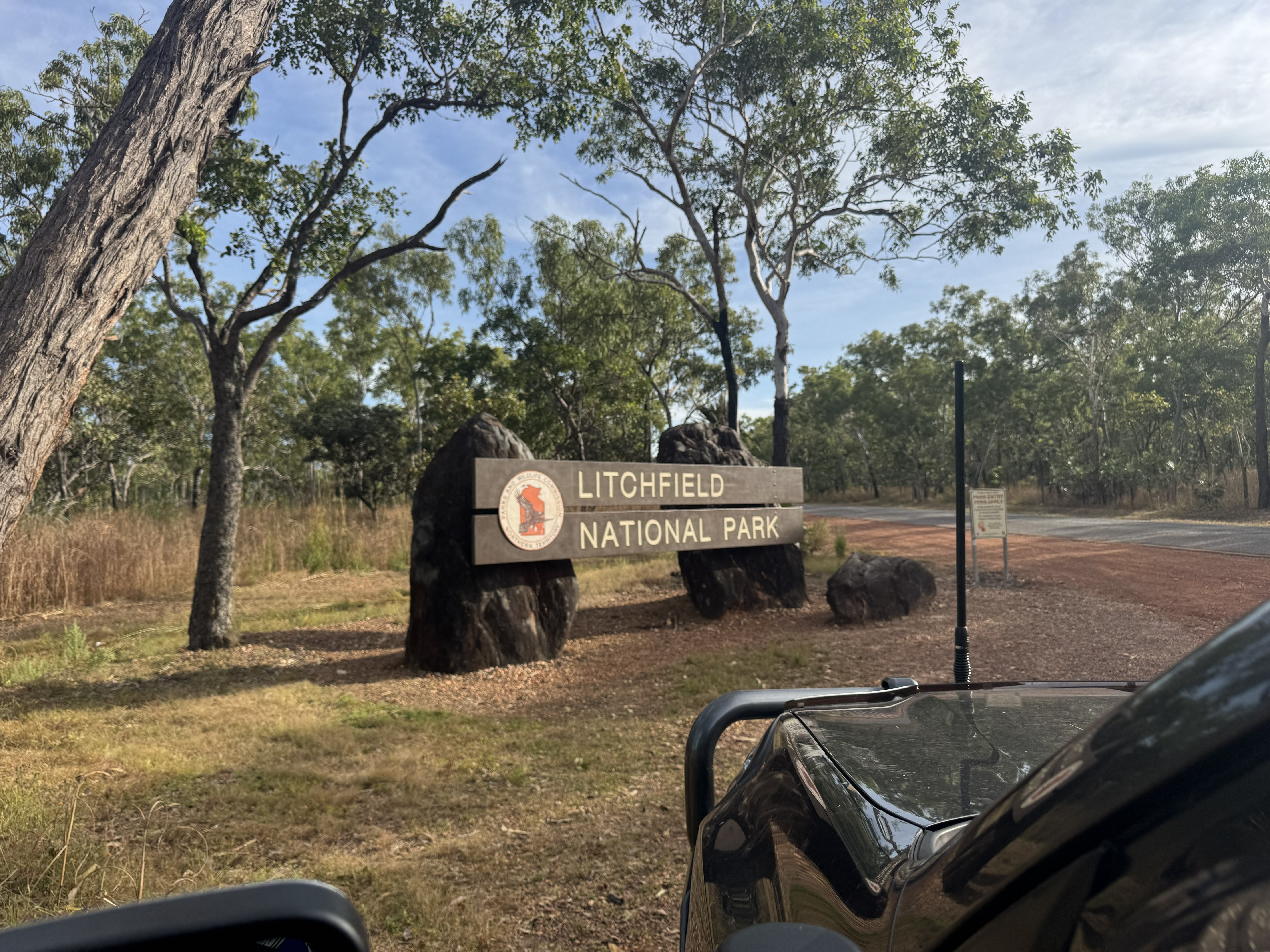
Litchfield is 120km south of Darwin — about an hour and a half on sealed road, no 4WD required to access the main attractions. You enter either from Batchelor (the main entrance) or from the south via Daly River Road (4WD only, often wet in the season). We came in through Batchelor.
The park is compact compared to Kakadu — you can loop through the main spots in a full day, or split it over two days to actually enjoy each one rather than rushing.
Magnetic Termite Mounds — Stop Here First
They’re on the way in, and most people either don’t stop or give them thirty seconds before moving on. Don’t do that.
The magnetic termite mounds at Litchfield are genuinely extraordinary — thousands of flat, blade-like structures all aligned north-south, built to regulate temperature. There’s an interpretive area explaining why and how they do it, and it’s genuinely fascinating even for the kids. The cathedral termite mounds nearby are also massive — some up to 6 metres tall.
Allow 20–30 minutes here. It’s one of those things that sounds niche and turns out to be a highlight.
Wangi Falls — The Iconic One
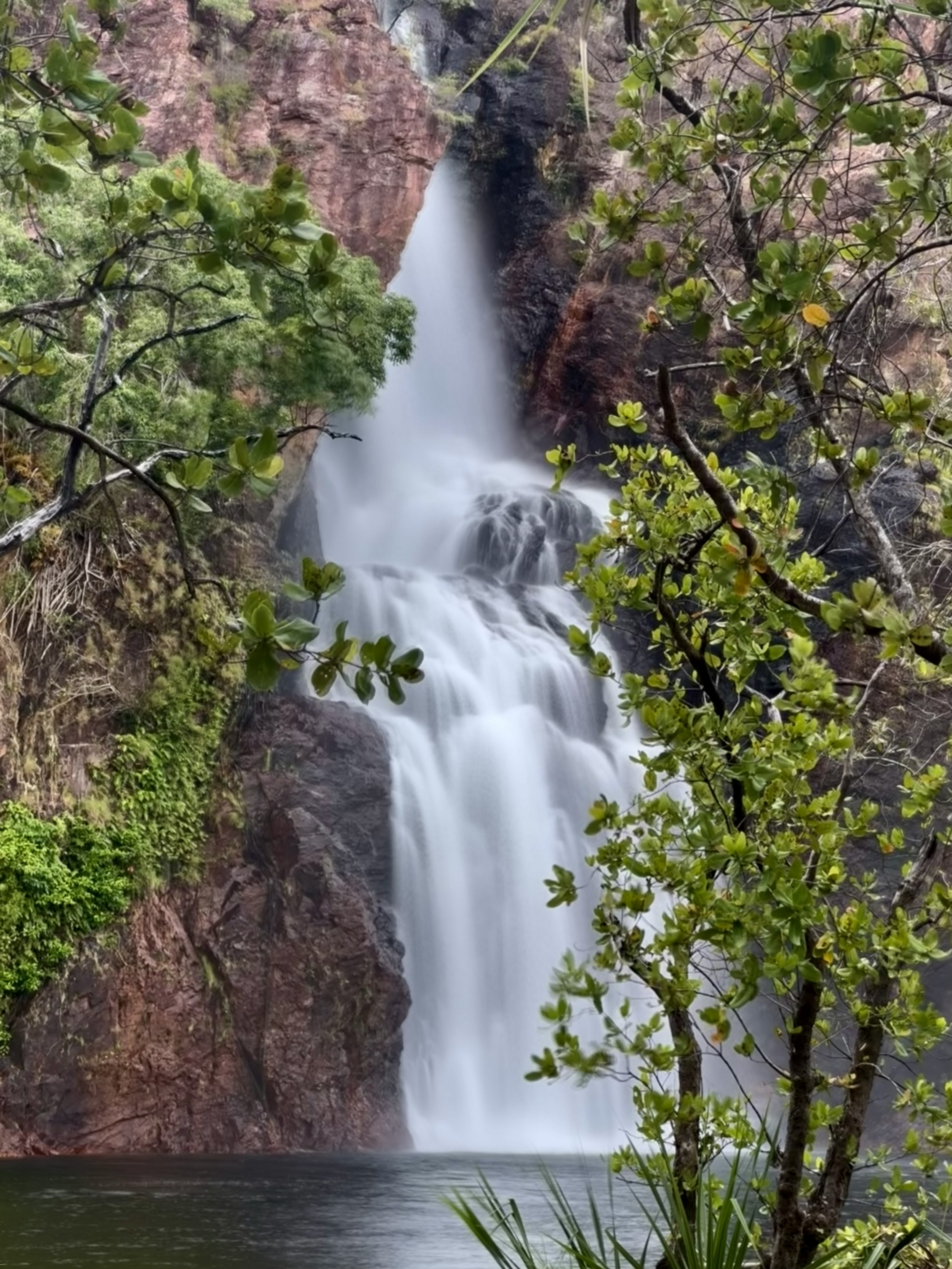
Wangi is the postcard image of Litchfield — a double waterfall cascading into a large, clear plunge pool surrounded by lush monsoon forest. It’s beautiful and it is exactly what it looks like in photos.
It’s also the busiest spot in the park. On a peak dry-season weekend it can feel crowded. Our strategy: get there before 9am, have a swim before the tour buses arrive, then head to the next spot as the crowds build.
Swimming: Yes, when open — the pool is surveyed and actively managed by NT Parks rangers, who only open it for swimming once it’s been cleared after the wet season. Always obey the signage on the day. Water is cool and refreshing. Our kids stayed in for close to two hours. The waterfall drop into the pool is a short but sharp swim across — worth doing.
The walk around the top of the falls (Wangi Lookout Trail) is about 3.5km and gives you views over the waterfall and the bush beyond. It’s steep in parts but manageable — the kids complained for about 10 minutes and then were fine.
Note: Wangi is sometimes closed for swimming due to croc sightings or seasonal conditions. Check the NT Parks website or the signs at the entrance before visiting.
Florence Falls — Better Than You Think
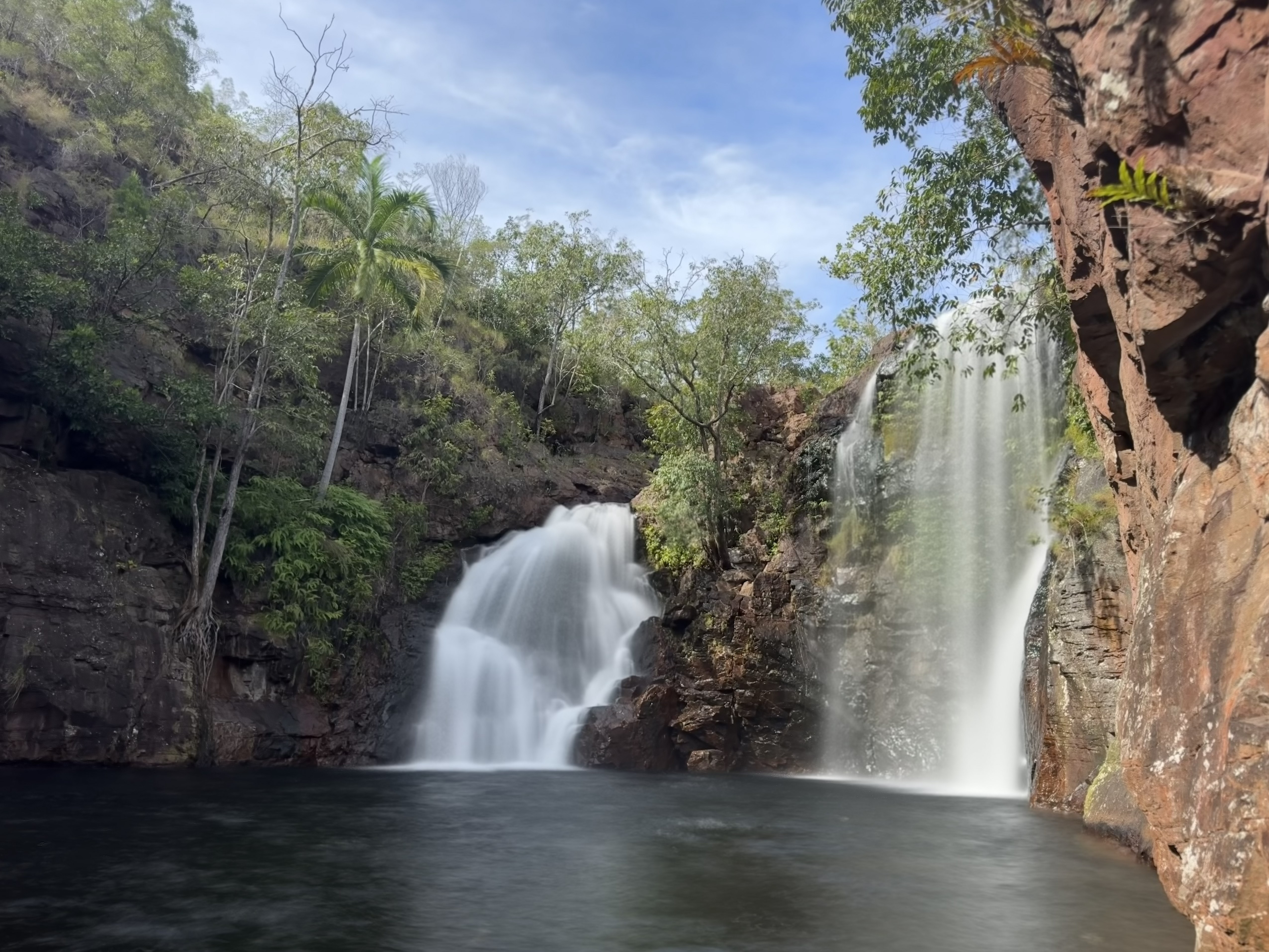
Florence is less impressive on paper (smaller pool, less dramatic falls) but in practice it’s often our pick. Fewer people. The pool is deeper in the rock and somehow feels more wild. There’s a lookout at the top that gives you the full picture before you walk down.
The walk down is about 170 steps — not too bad. Coming back up is more of a workout, especially for the under-10s.
If you’re only doing one swimming hole and you want fewer crowds, Florence is it.
Buley Rockhole — Kids Will Not Leave
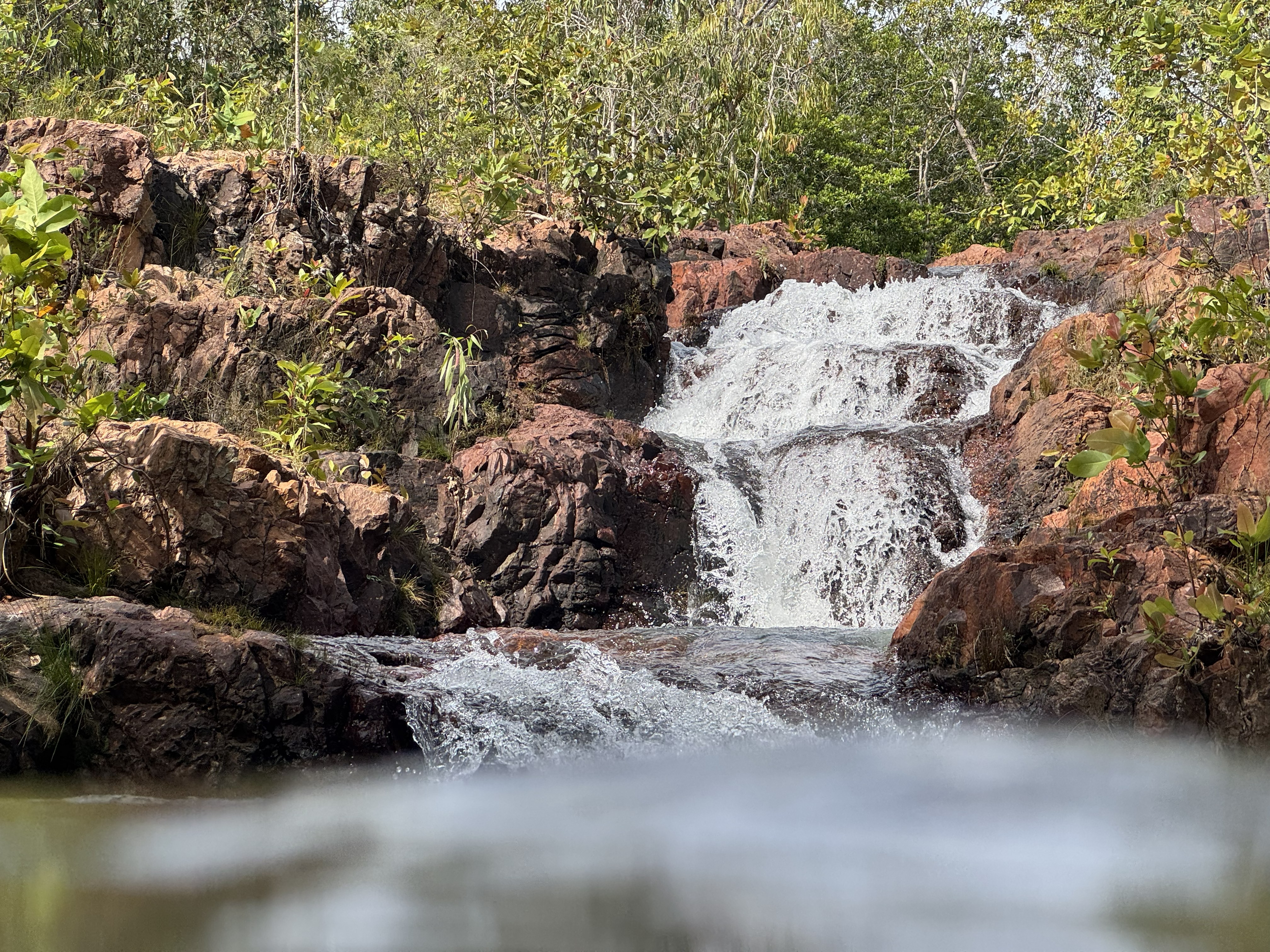
Buley Rockhole is a series of natural rock pools connected by small waterfalls, in a shaded creek setting. It’s like a natural waterslide course. Kids absolutely lose their minds for it. We spent two hours there on our second day despite saying we’d stop for thirty minutes.
This is the spot for families with younger children — shallow pools, no big drops, easy to keep an eye on kids, naturally enclosed by rock.
Tolmer Falls — For the View
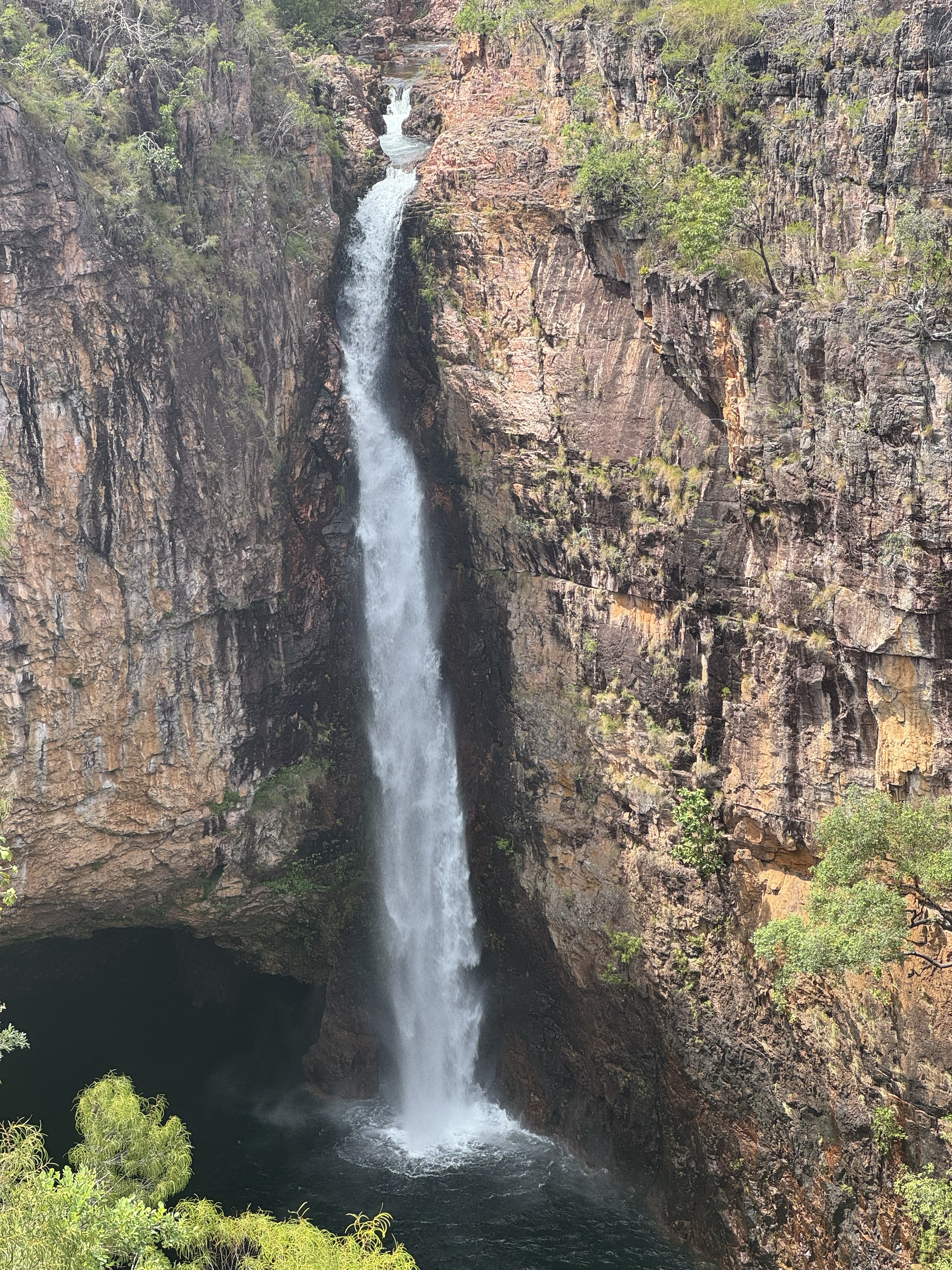
Tolmer is a viewing-only waterfall — the pool is part of a bat habitat and swimming isn’t permitted. But the lookout view is genuinely dramatic. The falls drop into a narrow gorge and on a clear morning the light in there is spectacular. Worth the short walk, don’t expect a swim.
Where to Camp
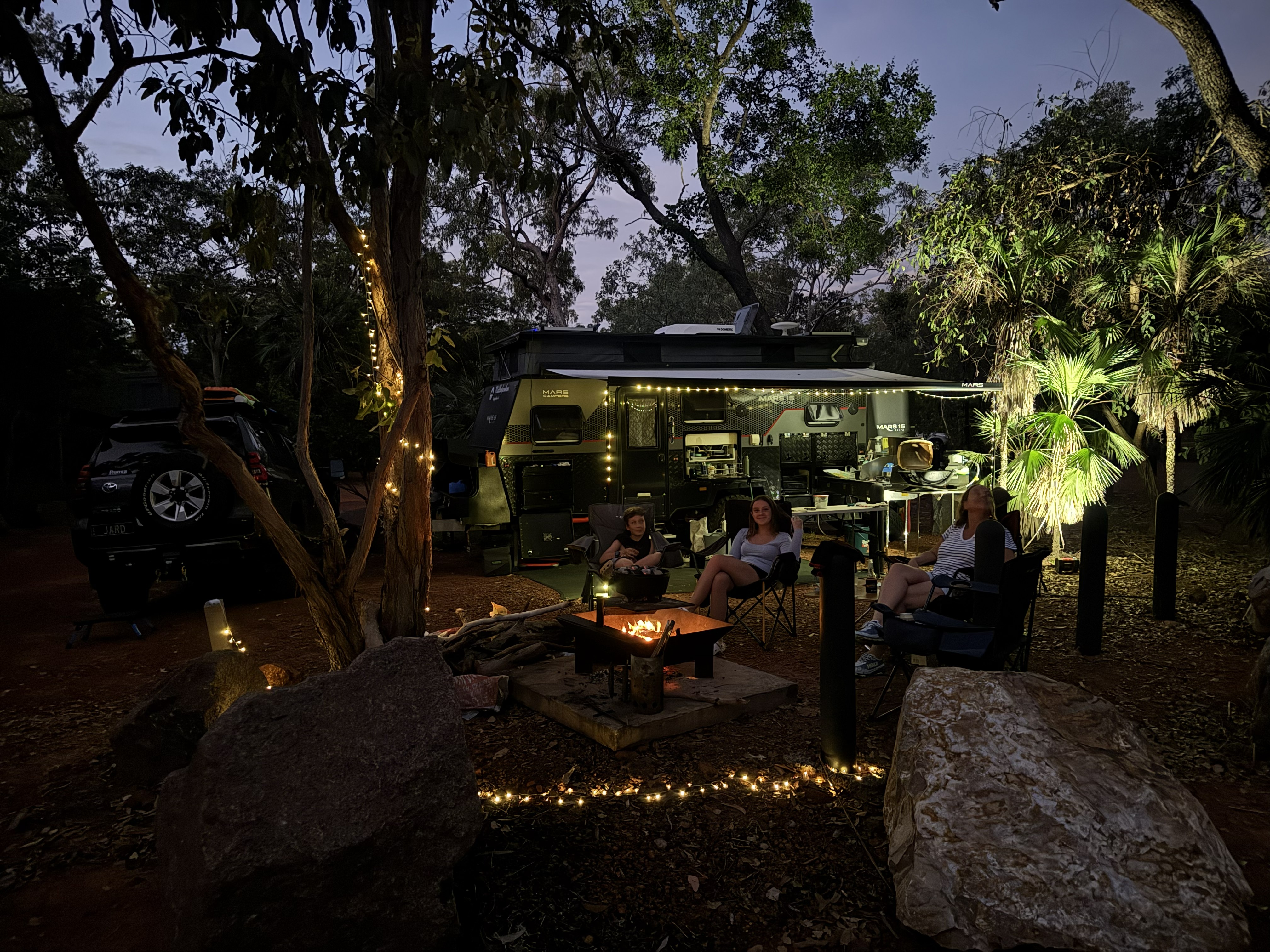
We stayed at Wangi campground — powered sites, good facilities, well-maintained. Being in the park means you’re there before the day trippers arrive each morning, which matters at the popular spots.
Florence Falls campground is another option — less facilities but closer to that part of the park.
Both fill up in peak season. Book through NT Parks in advance.
The Honest Take
Litchfield does what it does very well. Clear water, safe swimming, manageable walks, extraordinary termite mounds, and a compact layout that doesn’t require a week to explore. It’s the sort of place that earns its reputation honestly rather than on hype.
If you’re starting a lap in Darwin, do Kakadu first, then Litchfield. The contrast works in both directions — Kakadu gives you the scale and the wildness, and Litchfield gives you the swimming holes and the relief.
Practical Info
Location: 120km south of Darwin via Batchelor
Entry fee: Interstate and international visitors need an NT Parks Pass — from $10/day per adult or $25/day per family. Kids under 18 and NT residents are free.
4WD required: No, for main attractions. South entrance via Daly River Road requires 4WD.
Best time: May to October. Some areas close in wet season due to flooding and croc activity.
Swimming: Wangi, Florence Falls, Buley Rockhole — all monitored and managed by NT Parks. Swim only when open, and always follow the signs on the day.
Don’t miss:
- Magnetic termite mounds (on the way in — allow 30 mins)
- Wangi Falls before 9am
- Buley Rockhole for kids
Campgrounds: Wangi (powered, best facilities), Florence Falls (more basic), Sandy Creek (4WD only, very remote)
Part of our Big Lap 2025 NT leg. We came from Darwin — next we headed west into the Kimberley.